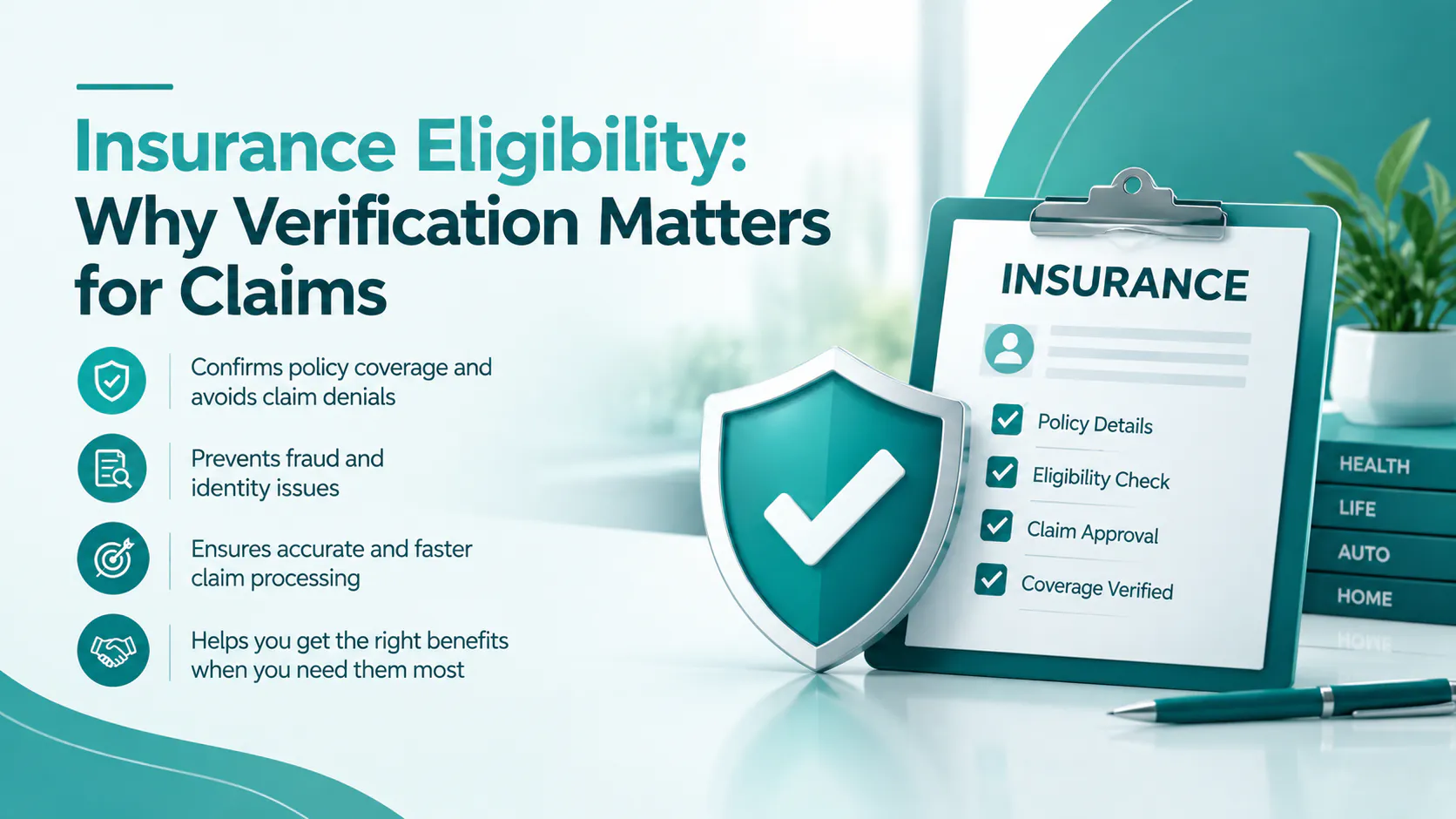
Insurance eligibility verification is an important step in the medical billing process because a patient having an insurance card does not always mean the coverage is active or applicable to the service being provided. Coverage can change because of employment changes, plan renewals, loss of coverage, or a different insurance plan.
A practice can reduce avoidable claim problems by confirming coverage, benefits, deductibles, copays, coinsurance, and network status before the patient receives care. A systematic insurance coverage verification process helps practices identify potential issues early instead of discovering them after a claim has already been submitted.
When eligibility is not checked properly, a claim may be submitted to an inactive plan, the wrong payer, or a plan that does not cover the particular service. These problems can result in denials, delayed payments, patient billing issues, and additional administrative work.
For example, urgent care billing can involve high patient volume and frequent insurance-related issues. The client’s specialty billing process specifically includes coverage verification to help identify lapsed coverage, uncovered services, and wrong-payer problems before they create downstream AR issues.
Why Insurance Eligibility Verification Matters
An insurance card mainly provides information about a patient’s insurance plan. It does not necessarily prove that the coverage is currently active on the date of service. A patient may have changed employers, lost coverage, switched plans, or have different benefits from those shown on an older insurance record.
A real-time eligibility inquiry provides more current information. It can confirm whether the patient has active coverage with the specific payer and whether the coverage applies on the date of the scheduled visit.
This is particularly important because eligibility verification and benefits verification are different. Eligibility confirms active coverage, while benefits verification goes further by checking what the plan pays for the specific service being provided.
What Should Be Checked Before the Visit?
A complete verification process should review more than the patient’s policy status. Important information can include:
- Active insurance coverage
- Benefits for the specific service
- Copay amounts
- Deductible status
- Coinsurance
- Network status
- Primary and secondary insurance
- Coordination of benefits
- Prior authorization requirements
Reviewing these details before the appointment gives the practice a clearer understanding of the patient’s coverage and potential financial responsibility.
For example, a patient can have active insurance but still have a deductible that has not been met. Another patient may have coverage but require prior authorization for a particular procedure. Identifying these requirements early gives the practice time to address them before the service is performed.
When Should Eligibility Be Verified?
Timing is an important part of the process. Checking eligibility only when an appointment is scheduled may not provide accurate information for the actual date of service because coverage can change between scheduling and the visit.
The client’s verification workflow calls for a real-time eligibility inquiry approximately 48–72 hours before the appointment. During this stage, active coverage, service-specific benefits, copay, deductible, coinsurance, network status, and coordination of benefits are reviewed when applicable.
Approximately 24 hours before the appointment, the verification results are reviewed again. Any inactive coverage, changes, or other issues can be flagged for the front desk, while the patient’s prior authorization status can also be confirmed.
At check-in, the insurance card can be compared with the verified information. Any discrepancies can then be addressed before the patient receives care.
How Verification Helps Prevent Claim Denials
Incorrect insurance information can create problems later in the billing cycle. If a claim is submitted to an inactive plan or the wrong payer, the payer may deny it even when the medical service itself was correctly provided.
Systematic verification helps identify the correct payer before claim submission. It can also identify coordination-of-benefits issues when a patient has primary and secondary insurance.
Prior authorization requirements can also be identified during the eligibility and benefits stage. If authorization is required, the process can begin before the appointment. This is much more useful than discovering the requirement after the service has already been performed.
The client’s process also calls for eligibility-related denials to be flagged after claims are submitted so the underlying cause can be reviewed and the verification process can be improved.
Benefits Verification Helps Reduce Patient Billing Surprises
Insurance verification is not only about getting claims paid. It can also help practices communicate more clearly with patients.
Confirming copays, deductibles, coinsurance, and network status before a visit gives the practice better information about potential patient responsibility. Patients can then be informed about coverage limitations or expected costs before receiving care when the information is available.
Network verification is particularly important because being in-network with an insurance company does not necessarily mean that a provider is in-network with every plan offered by that carrier. The client’s process therefore checks network status at the specific plan level.
Eligibility Verification and Different Payer Types
Verification requirements can differ depending on the type of insurance.
Commercial insurance commonly uses electronic eligibility transactions through the payer or clearinghouse. Medicare eligibility can involve HETS, while Medicaid verification is handled through state-specific systems. Medicare Advantage plans need to be checked through the applicable plan because benefits, network restrictions, and authorization requirements can differ from traditional Medicare.
Workers’ compensation also requires a separate process. The client’s workflow includes verifying the claim number, employer carrier, authorized treating provider, authorized treatment scope, and billing address for the specific workers’ compensation carrier.
Making Verification Part of the Revenue Cycle
Eligibility verification should connect with the rest of the medical billing process rather than operate as an isolated front-desk task. Incorrect information at registration can lead to eligibility denials, coordination-of-benefits problems, patient billing issues, and delayed payments later in the cycle.
When coverage information is verified accurately and passed through to claim submission, practices have a stronger foundation for accurate billing. Problems identified during verification can also provide useful information for improving registration, authorization, coding, and claims workflows.
A consistent process is especially valuable for practices that manage a large number of appointments or multiple insurance plans. Each verified appointment creates an opportunity to identify coverage problems before they become claim problems.
Why Consistent Verification Matters
Insurance coverage is not static. Patients can change plans, benefits can vary by service, and payer requirements can differ. Relying only on an insurance card or an old verification can therefore leave practices exposed to avoidable billing problems.
A structured process that checks coverage close to the appointment, confirms benefits, identifies authorization requirements, verifies network status, and reviews coordination of benefits can help practices address issues before the claim reaches the payer.
Practices that want to understand how these front-end processes connect with billing, claims, and revenue management can review the broader approach used by Netix Medical Billing and its medical revenue cycle services.